|
Tips and Use 
What
is dry ice?
Dry
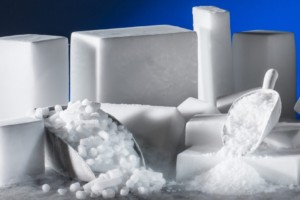
ice is frozen carbon dioxide. This naturally
occurring gas when frozen at the extremely cold
temperature of -109 degrees F. becomes solid. In
it's solid form it can be cut to various sizes
and has many uses.
Some
of the benefits of our dry ice include:
Freezing: Using
dry ice, five pounds lasts approximately
24 hours in a vented cooler.
Cooling: Put a small amount of
dry ice in the bottom of a vented cooler, cover
with wet ice and then pack your cooler.
Halloween and other Special Events:
Always have plenty of
dry ice on hand for Halloween and any special
event. Dry ice is great for creating that
special effect in a witch’s cauldron, carved or
plastic pumpkin or creating that special effect
for your party or event.
Camping, Hunting, Fishing and Boating:
You can now enjoy the advantages of
refrigeration with the convenience of dry ice.
Dry ice from Arctic Dry Ice, Inc.
is perfect for your every refrigeration need,
whether you are camping, hunting, boating,
fishing or for keeping your food cold at the
beach. Whether your food needs to be kept
refrigerated or frozen, dry ice can be used.
Power Failure and Defrosting Freezer:
When the utilities fail, put your
refrigerated items in a
vented cooler with dry ice on the bottom. You
can put newspaper or a piece of cardboard
between the food and the dry ice, so your items
do not freeze, just stay cold. For your frozen
items, put them in a vented cooler with the dry
ice on top of your items to keep them frozen.
Make sure to keep your cooler in a
well-ventilated area. When your power is back on
and your food items have been returned to the
refrigerator and freezer, let the dry ice
sublimate in an open well ventilated area.
Facts You Should Know When Using Dry Ice:
Dry ice is solidified carbon dioxide (CO2).
Regular water ice exists at temperatures of 32F
(0C) and below; dry ice is extremely cold, 109F
(79C). Unlike water ice, dry ice does not melt.
Instead it sublimates, changes directly from
solid to gas, releasing C02. Carbon dioxide
vapor is heavier than air and in confined,
poorly ventilated spaces it can displace air,
causing asphyxiation. It is possible for CO2
vapor to accumulate in low-lying areas, outside,
under zero or very light wind conditions.
USE CAUTION!
Handle dry ice with care.
ALWAYS USE GLOVES
when
handling dry ice. Oven mitts or even a
towel can also be used when handling dry ice.
NEVER touch dry ice directly to skin
as it can
cause frost bite, burns and other
injuries. Use in a well ventilated area as the
release of carbon dioxide gas may cause
difficulty breathing and can result in
suffocation. Keep containers ventilated. If
using a plastic cooler, leave lid cracked open and/or open
the drain spigot.
Arctic Dry Ice, Inc. will not be
liable for any direct, indirect, incidental,
consequential, special, punitive, exemplary or
other damages arising there from.
  |